
If you are faced with a task where you have to create a product for a client.
First make sure that you know what they need.
They might not know.
One way you could all try to figure out what actually needs to be done is the 5 Whys.
Simply ask the client why they have come to a certain conclusion.
Ofcourse don't simply keep asking "Why?", but try to really listen to what they're saying and ask the questions that need to be asked. In no time you'll have a solid idea you can start to sketch out.
A great sketch
A great sketch consists of a few things:
It is a reflection of the ideal.
It shows what conclusions or insights you could get if you had all the data you needed. Don't worry if the data isn't available, you can just trim it down to reality, but in the end your product will be as close to ideal as is feasible.
It has specific titles and metrics listed.
This makes it clearer what you intend to communicate with this section. Both to the client, but also you. It can serve as an anchoring point where you can come back to and make sure you're not straying too far from your objective.
Consider the users story and needs
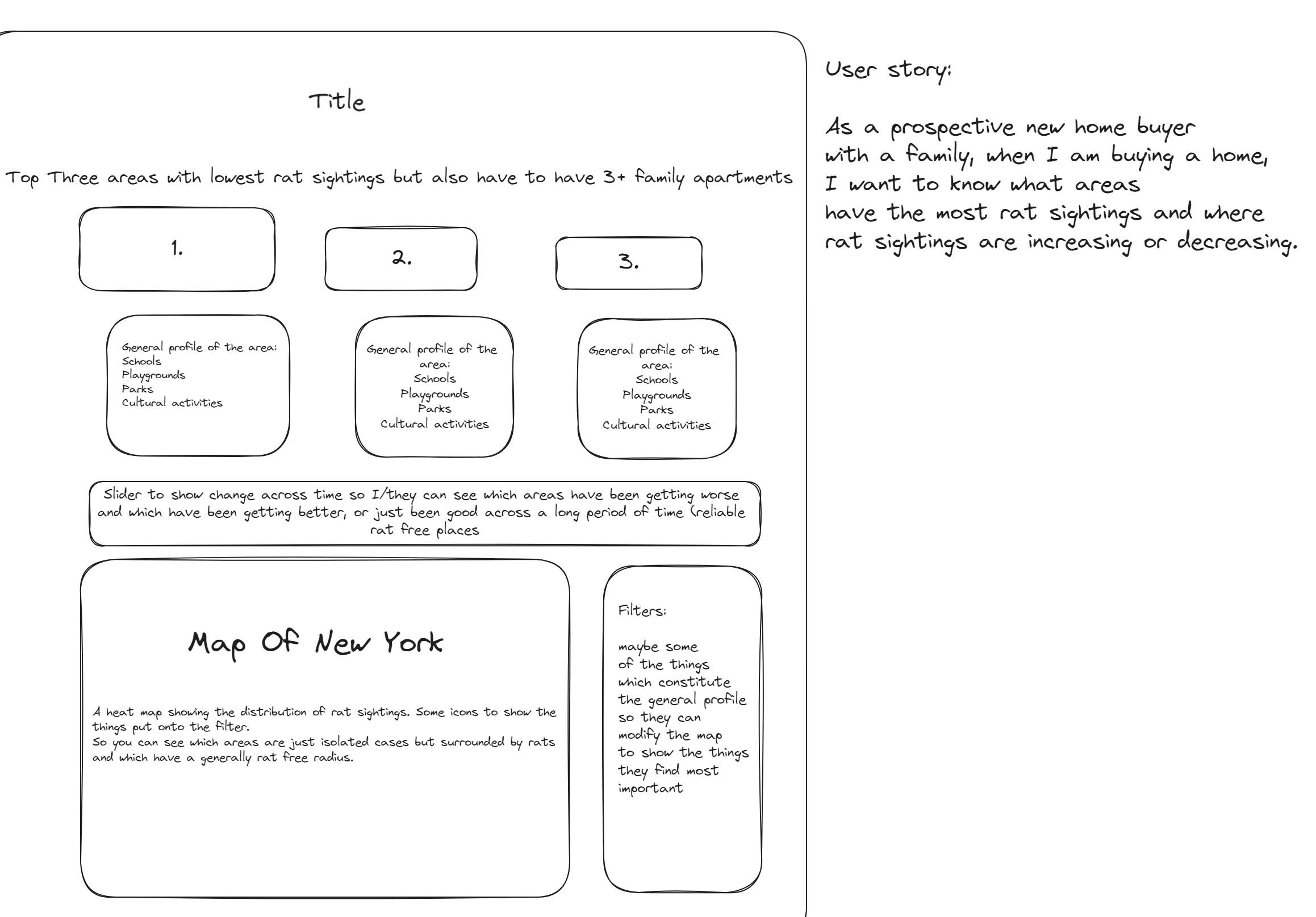
Writing a user story will help with this. A user story looks like this-
“As a X, when I Y, I want to be able to Z”
Making sure you're focused on this point will help you to push out any of your own influences, biases and interests. It's about the client, not you. You can also try using the 5 Whys method on yourself answering from the perspective of the client, before asking the client or in between meetings, to try and get to the bottom of the real needs of the deliverable.
Below is my first Sketch and User Story, try and see where I haven't followed these principles!